 New Jersey
Horses keep New Jersey open
The horse is New Jersey's state animal, and New Jersey has more horses per square mile than any other state. In the most densely populated state in the country, horse farms are some of the last places keeping fields, pasture and trails green.
From the Rutgers Equine Science Center's statewide study, New Jersey Equine Industry, 2007, the most recent count.
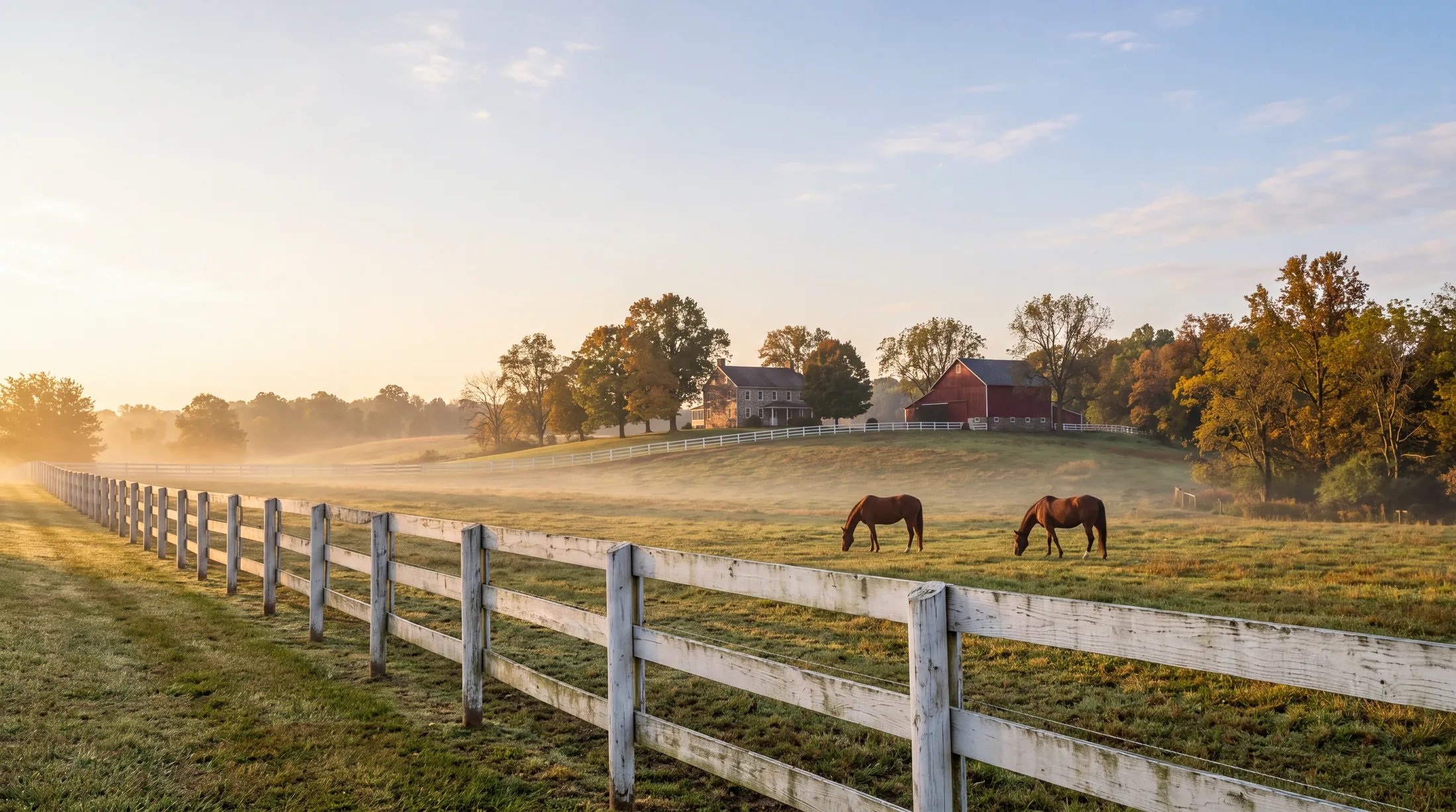
Horses and open space go together
A horse needs room: pasture, hay fields, riding rings and trails. Rutgers' statewide study counted 176,000 acres reported by New Jersey's horse operations. That's land that stays green instead of being paved.
When a horse farm closes, its land rarely stays open. Keeping horses in New Jersey is one of the most direct ways to keep its farmland.
Keep the horses here, and the fields stay with them.
Horses work for the state's economy
The same study found horses add about $1.1 billion a year to New Jersey's economy, support 12,970 jobs and bring in about $160 million a year in taxes. That's farriers, vets, feed stores, trainers, tack shops, haulers and the farms themselves.
The state animal
New Jersey named the horse its state animal in 1977. It's part of who we are, and the Alliance means to keep it part of what comes next.
Why one voice matters
New Jersey's horse people are spread across many breeds, clubs and towns. Decisions about land use, zoning and open space get made town by town, and they go better when the people who care show up together. The Alliance puts everyone in one place, so that voice is easy to hear.
Sources: Rutgers Equine Science Center, New Jersey Equine Industry, 2007 (Fact Sheet FS1086). New Jersey Statutes 52:9A‑4, the horse as state animal (1977). Rutgers Equine Science Center, horses per square mile.